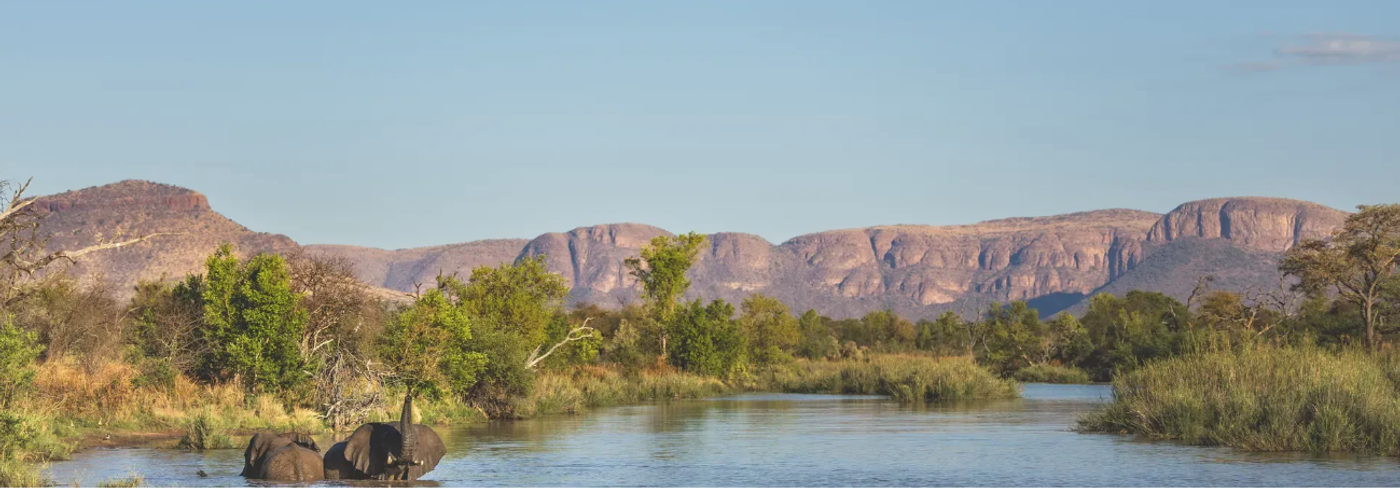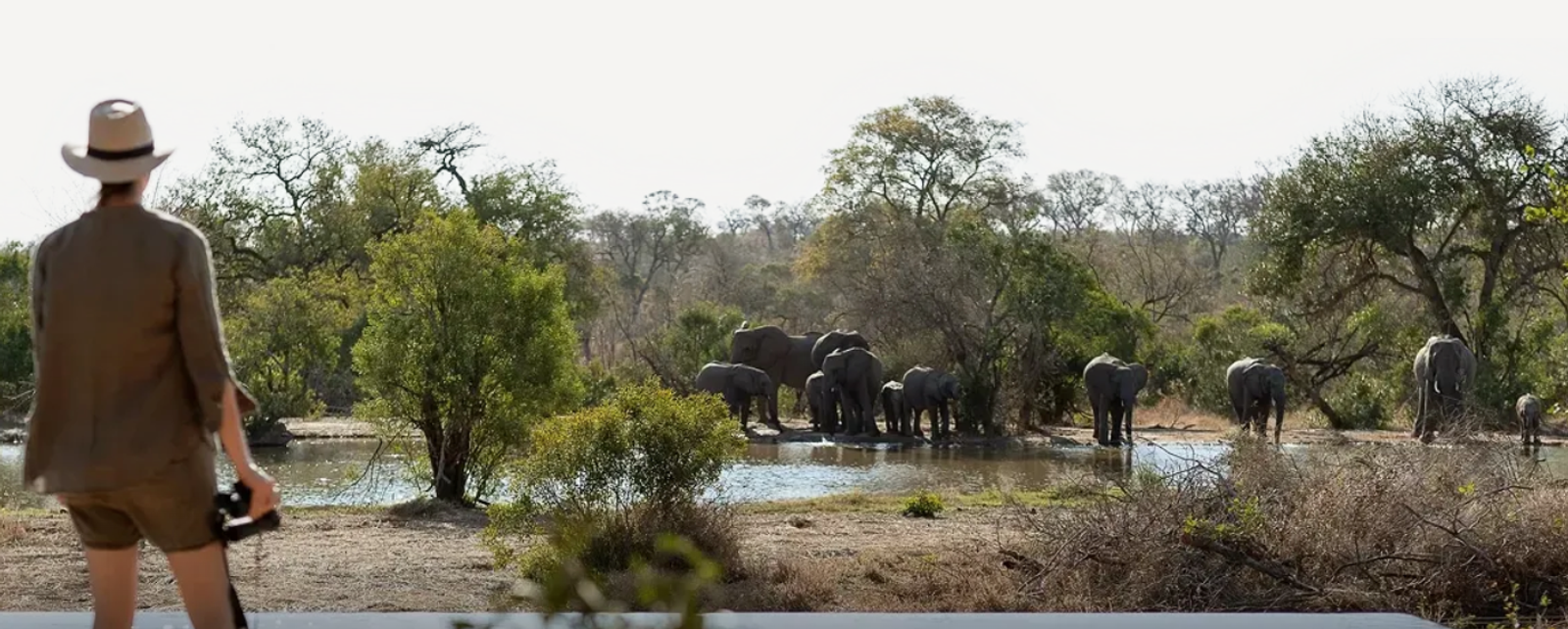
South Africa is the trip I most often hear described as "someday." More couples ask me about it than about anywhere else, and almost all of them talk about it as a thing they will get to eventually. I want to make the case for sooner, and to show you why the planning, not the destination, is the part that makes or breaks it.
Here is the first thing to understand: South Africa is not one trip. It is three, and the order matters.
Three trips, three speeds
A proper South African journey moves in three movements, and they run at completely different speeds: Cape Town and the Winelands to begin, the bush at its heart, and a considered ending to bring you home.
Cape Town and the Winelands are the opening, and together they set a gentle pace. Cape Town is a city with a mountain in the middle of it, moving at the speed of a great coastal city: restaurants, culture, history, the ocean at its doorstep. Then the Winelands, just beyond it, are slow and long-lunched, the part of the trip where you exhale and an afternoon disappears into a tasting and a table. This is the leg where you land, adjust, and ease in.
The bush is the opposite speed entirely, and it lives on a rhythm nothing else does. You are up at 5am, out before the light, hours of tracking across open country. Then you come back to camp and are completely restored: a massage, a relaxed dinner that has no business being that good so far from anywhere, a suite more lavish than most hotels will ever be. And then, before dawn the next day, you are out tracking again. That swing, between real effort and genuine indulgence, is what a great safari camp is built to give you, and it is why the bush leaves you changed rather than just tired.
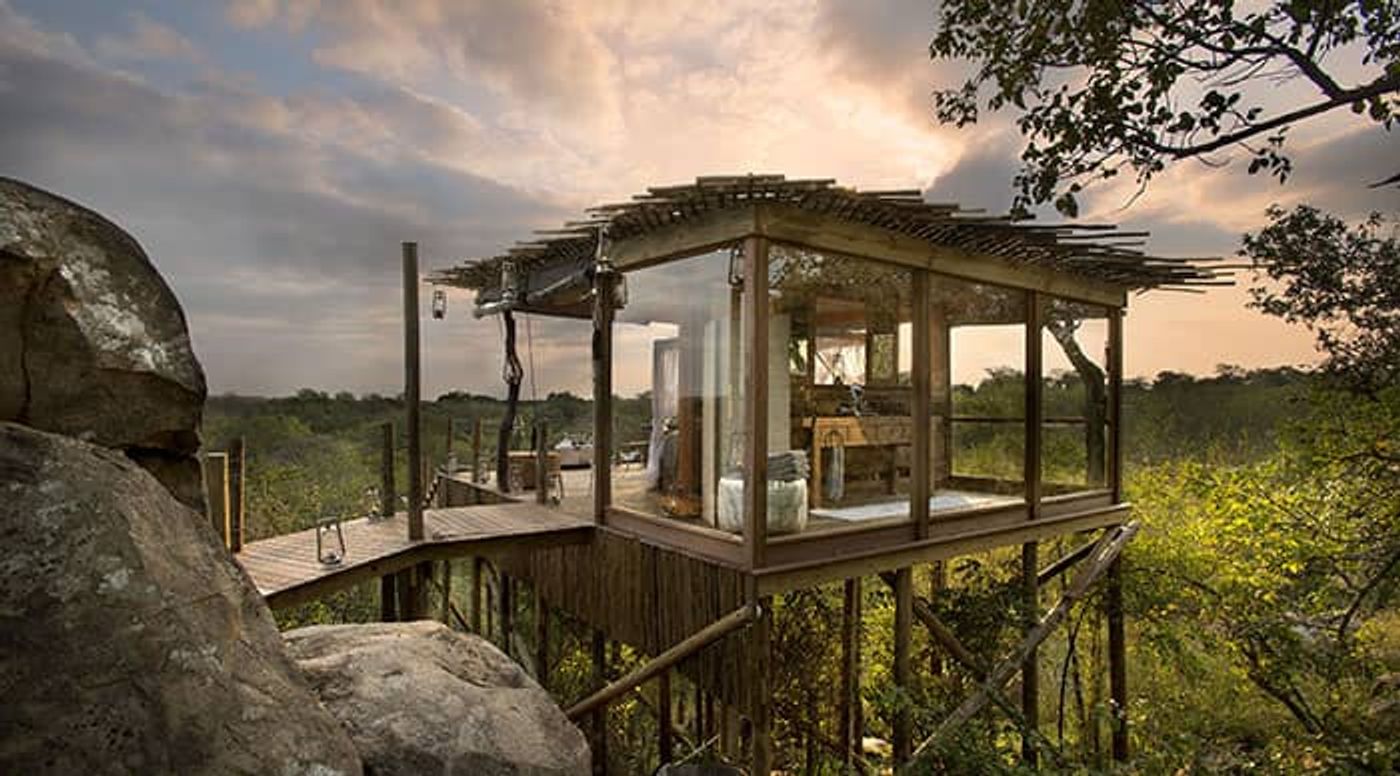
The bush is not one experience either, and where I send you depends on what you are after. For a first safari that balances classic Big Five game viewing with something genuinely memorable, I often point couples toward Lion Sands River Lodge, on the Sabie River across the Sabi Sand and Kruger. It is also a property I book as a preferred partner, which means I can build in extras a direct booking would not get you: a room upgrade on arrival when it is available, a complimentary in-suite spa treatment, and on a longer stay, a complimentary night sleeping out in one of the reserve's open-air treehouses, a bed and a lantern raised high above the bush under the stars. That last one is the kind of thing couples remember for the rest of their lives.
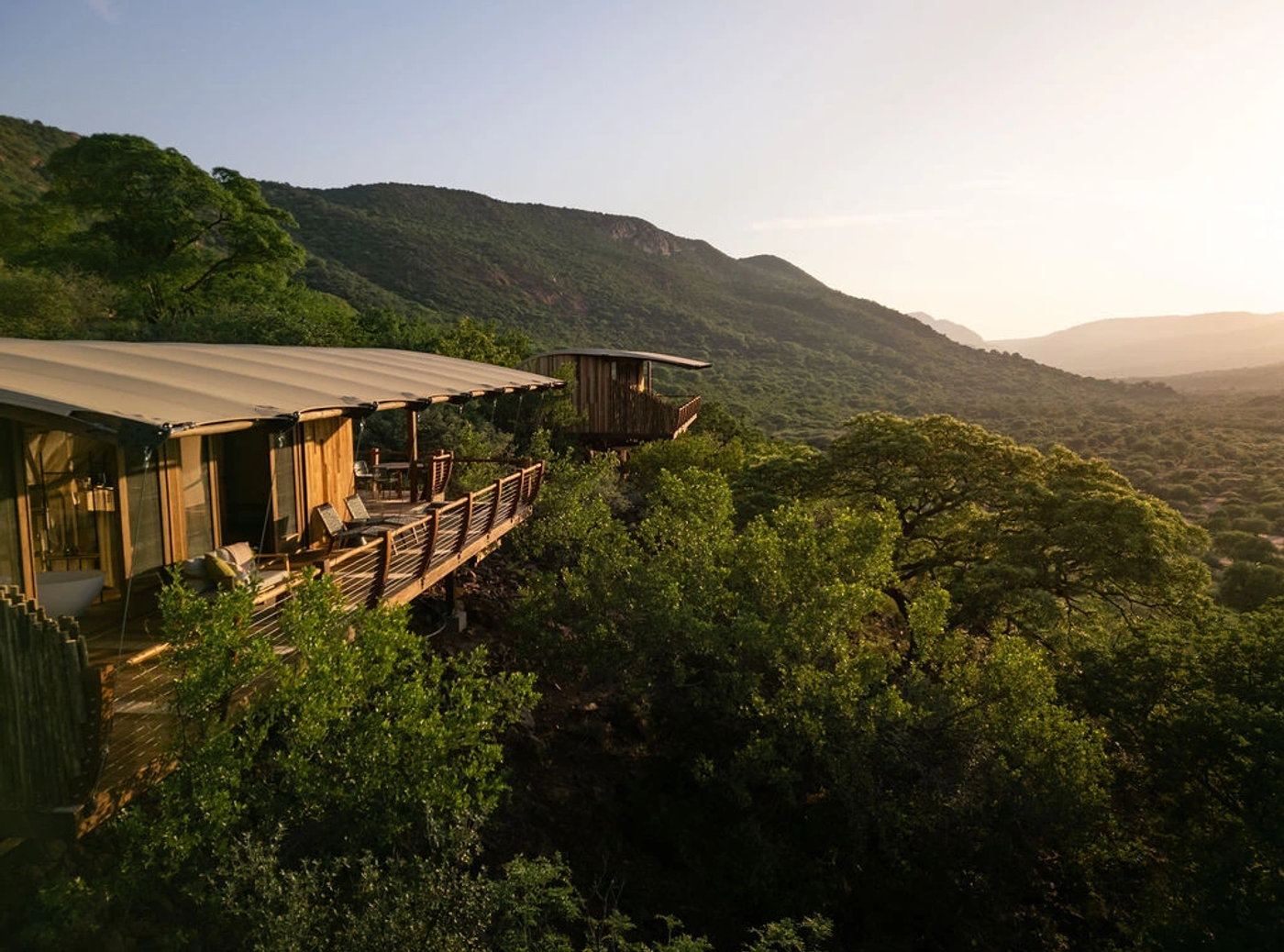
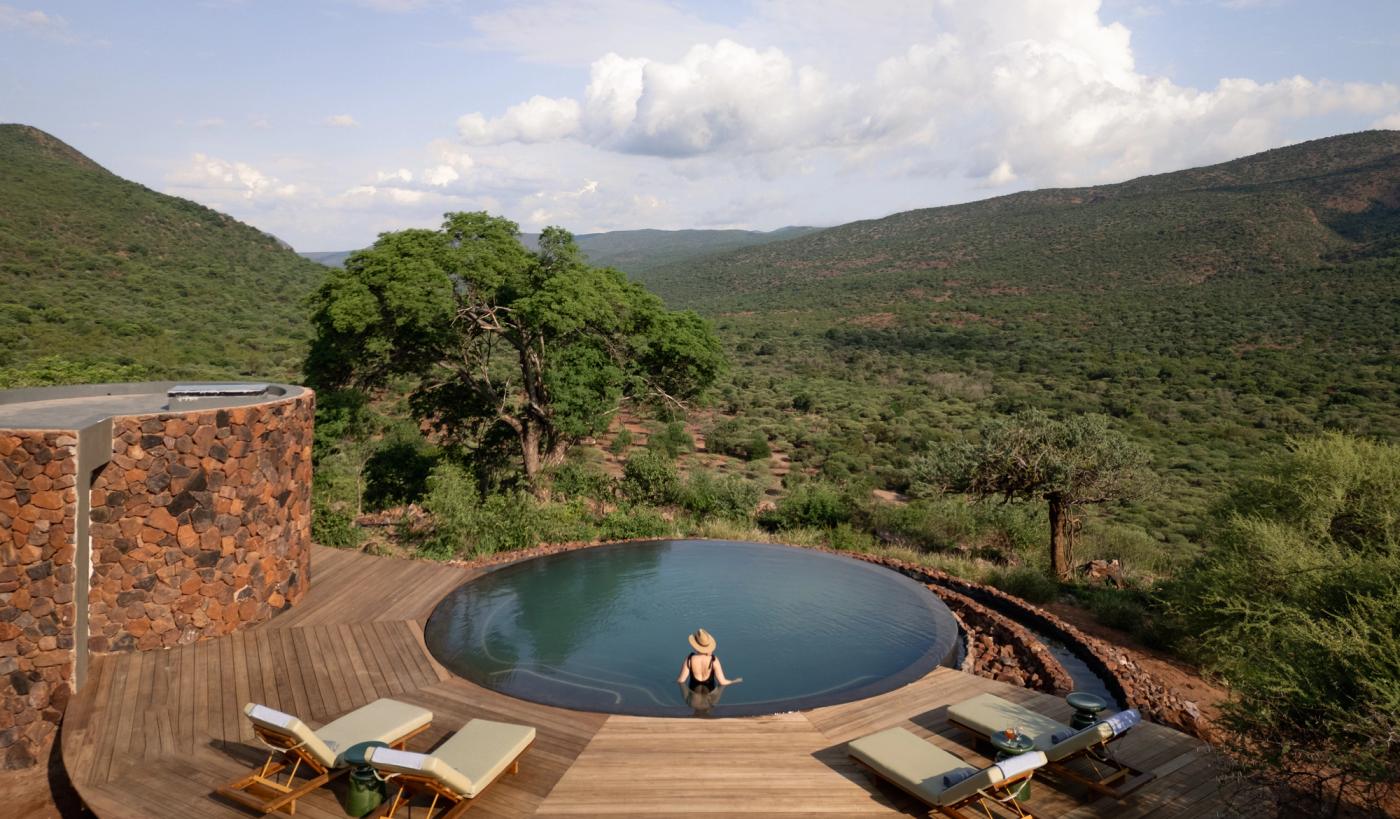
For the couple who wants something different from the classic safari, a distinct landscape and a real conservation story, I point them to Few & Far Luvhondo, in the Soutpansberg mountains up in Limpopo. This is not the flat riverine bush of the Sabi Sand. It is mountains and ancient baobabs, a region with more biodiversity than all of Europe, and the lodge itself is carbon-negative, named one of Time Magazine's greatest places in the world. Its signature is a solar-powered aerial cable car that carries you above the treetops to watch wildlife from the sky. It is the version of the bush for two people who want to be moved by somewhere genuinely off the expected path.
The order I favor is city first, then the bush, and then an intentional ending, and the reasoning is practical rather than aesthetic. After a long international flight, Cape Town lets you land, settle, and adjust at a relaxed pace before anything is asked of you, so you are not doing a dawn game drive on fifteen hours of jet lag.
Where the trip ends is a real decision, not an afterthought, because safari mornings are early and the camps sit far from any major airport. I do not like sending couples straight from a 5am game drive onto a string of small connecting flights and then a long-haul home. So I build in a proper ending. For most couples that means routing out through Johannesburg, the country's main international hub, so the flight home is direct and simple. For couples who want to land softly, we add a few days of beach on the Eastern Cape coast to decompress after the intensity of the bush before the journey home. One is the efficient close, the other is the restful one. Either way, the trip does not just stop in the bush and scramble to an airport. It resolves on purpose.
When you go depends on what you want to weigh
This is the real planning question hiding inside "when should we go," and it is where most couples do not realize there is a decision to make.
The bush shows its best in the dry winter months, roughly May through September. The growth thins out, water becomes scarce, and the animals gather at what is left, which makes them far easier to see. Cool, clear mornings, sparse vegetation, and reliable sightings. This is the classic safari window for a reason.
Cape Town is at its best in the opposite season, the warm, dry months of roughly November through March. That is when the city and the Winelands are at their summer height.
Those two do not overlap. That is the tension at the center of the whole trip. Chase peak safari and you get a cooler, quieter Cape. Chase peak Cape Town and you get a greener, harder bush where the animals are more scattered.
My usual answer, for a couple who wants both to be genuinely good rather than one perfect and one compromised, is the shoulder months: April and May, or September and October. In those windows you get strong game viewing (September and October in particular are exceptional in the bush, right before the rains) and a Cape Town that still behaves. Not the Cape at its absolute summer peak, but pleasant, walkable, and lovely, with the safari at or near its best. For most couples, that balance is the right trade.
Why the planning is the part that matters
Everything above is why this is not a trip to improvise. The sequencing, the seasonal trade, the internal flights that tie three regions together, the camps themselves, all of it compounds, and getting the order and the timing right is the difference between a good version of this trip and the version people come home changed by.
This is where an advisor earns their place, and it is not about booking logistics. It is judgment. Which camp suits the two of you specifically, out of dozens that all photograph beautifully. How to weigh the seasonal trade for what you each care about most. How to route three regions so the trip builds instead of exhausting you, and lands you home without a scramble. Those are not decisions you make better by starting sooner. They are decisions you make better with someone who has already thought them through, so that the trip you take is the fully realized version, not the one you assembled from a search engine.
The kind of trip this is
This one rewards two people who want to be moved, not only rested. It is active. It covers ground. It asks something of you, the early mornings, the distances, the shift between three very different worlds in a single trip. That is the point of it.
Some trips you come home relaxed from. You come home from this one changed.
The honest truth is that the only thing between you and this trip is the decision to take it. Not the logistics, not the timing, not finding the right camps in the right season. That is my work, and it moves as quickly as you want it to. What I need from you is simply the choice to go.
If this beautiful country is on your list, let's start planning. Tell me roughly when you're drawn to go, and I'll handle the rest.